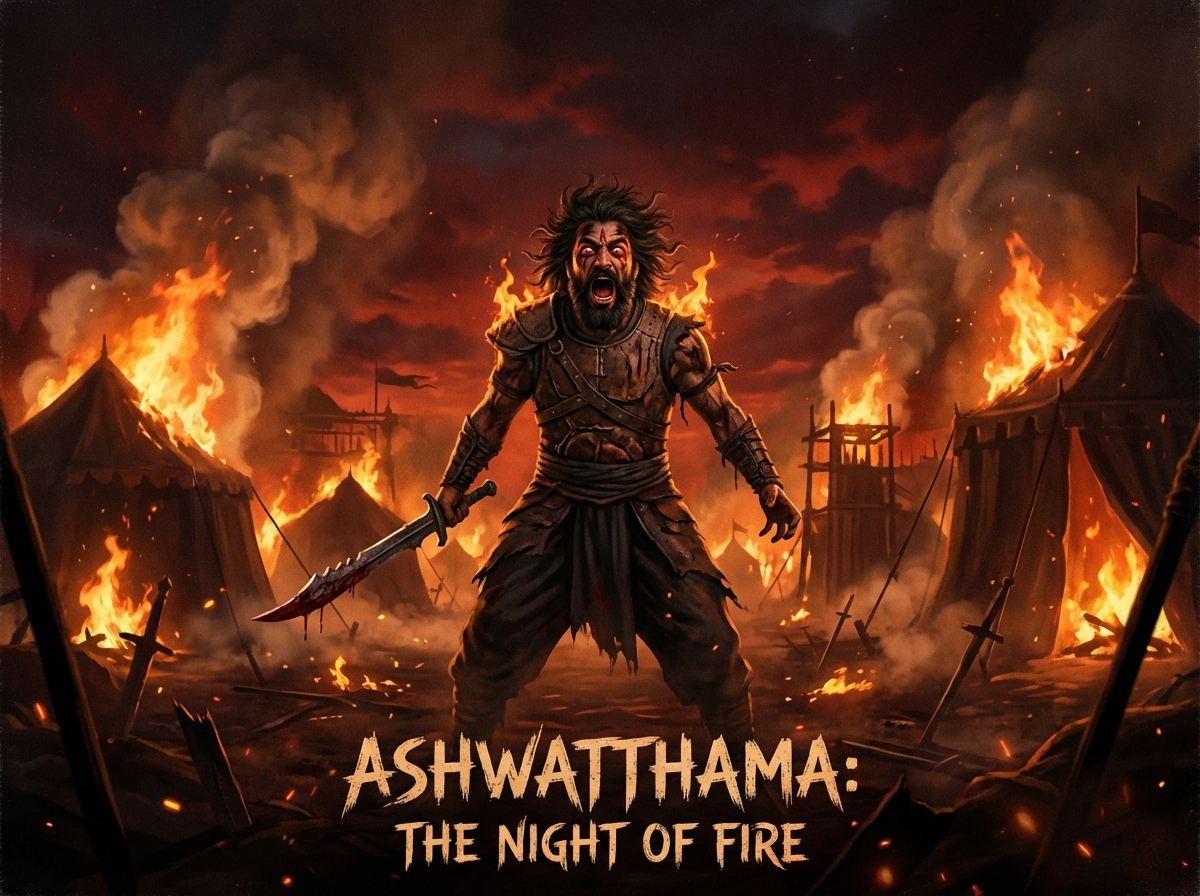
Ashwatthama
The Night Rage Burned Everything
The Kurukshetra War is over. Eighteen days. Millions dead. The Pandavas have won. It's done.
Except for one man who can't let it be done.
Ashwatthama is the son of Drona, the greatest weapons teacher in the world. Drona trained both the Pandavas and the Kauravas. He was untouchable on the battlefield until the Pandavas used a trick to break him — they killed an elephant named Ashwatthama (same name as his son) and then shouted "Ashwatthama is dead!" Drona, devastated, turned to Yudhishthira — the one man who never lies — and asked if it was true. Yudhishthira said "Ashwatthama is dead" and then, under his breath, "the elephant." Drona heard only the first part. He dropped his weapons. And Dhrishtadyumna cut off his head.
That's the context. Now hold that grief in your mind.
On the final night after the war, Ashwatthama can't sleep. His father was killed through deception. The Kauravas, his side, have lost everything. Duryodhana is dying, his thighs shattered by Bhima. As Ashwatthama sits in the darkness of the forest, he watches an owl attack a nest of sleeping crows, killing them all silently.
And something breaks in him.
He enters the Pandava camp at night. Not the Pandavas themselves — they're elsewhere. But their sons are sleeping there. Draupadi's five sons, children, along with Dhrishtadyumna (the man who beheaded his father) and the remaining Pandava warriors. Ashwatthama, one of the most skilled warriors alive, slaughters them in their sleep. All of them. He crushes the children's skulls. He sets the camp on fire and blocks the exits so no one escapes.
This is not a battle. It's a massacre. And the war was already over.
When the Pandavas discover what happened, Draupadi's grief is beyond words. She's lost all five sons. Arjuna hunts Ashwatthama down. In desperation, Ashwatthama launches the Brahmastra — a weapon of mass destruction, essentially a divine nuclear option — aimed at the unborn child in Uttara's womb (the last heir of the Pandava line). Krishna intervenes, saves the child (who will be born as Parikshit), and then delivers the punishment.
Krishna curses Ashwatthama to wander the earth for eternity. Not death. Immortality. But the worst kind: his body will rot with wounds and sores that never heal, he'll be alone forever, no one will shelter him or show him kindness, and he'll carry the memory of what he did for all of time.
Three thousand years of Indian tradition say he's still walking.
Here's what the Mahabharata is actually teaching with this story: the war killed warriors. Ashwatthama's rage killed children. The battlefield, with all its horror, still had rules — codes of conduct, sunrise-to-sunset fighting, no attacking the unarmed. Ashwatthama's anger erased every rule. Grief is human. But grief that becomes rage, rage that abandons all restraint, destroys things the war itself couldn't touch.
The Pandavas won and lost their children on the same week. Because one man decided his pain entitled him to burn everything down.
Anger tells you it's righteous. That's the trick. The fire doesn't know the difference between the guilty and the sleeping.